
How to Create a Cohesive Luxury Interior in Miami
Bring furniture, flooring, doors and lighting into one thoughtful design. Use a clear palette and practical room planning to make the whole home feel connected.
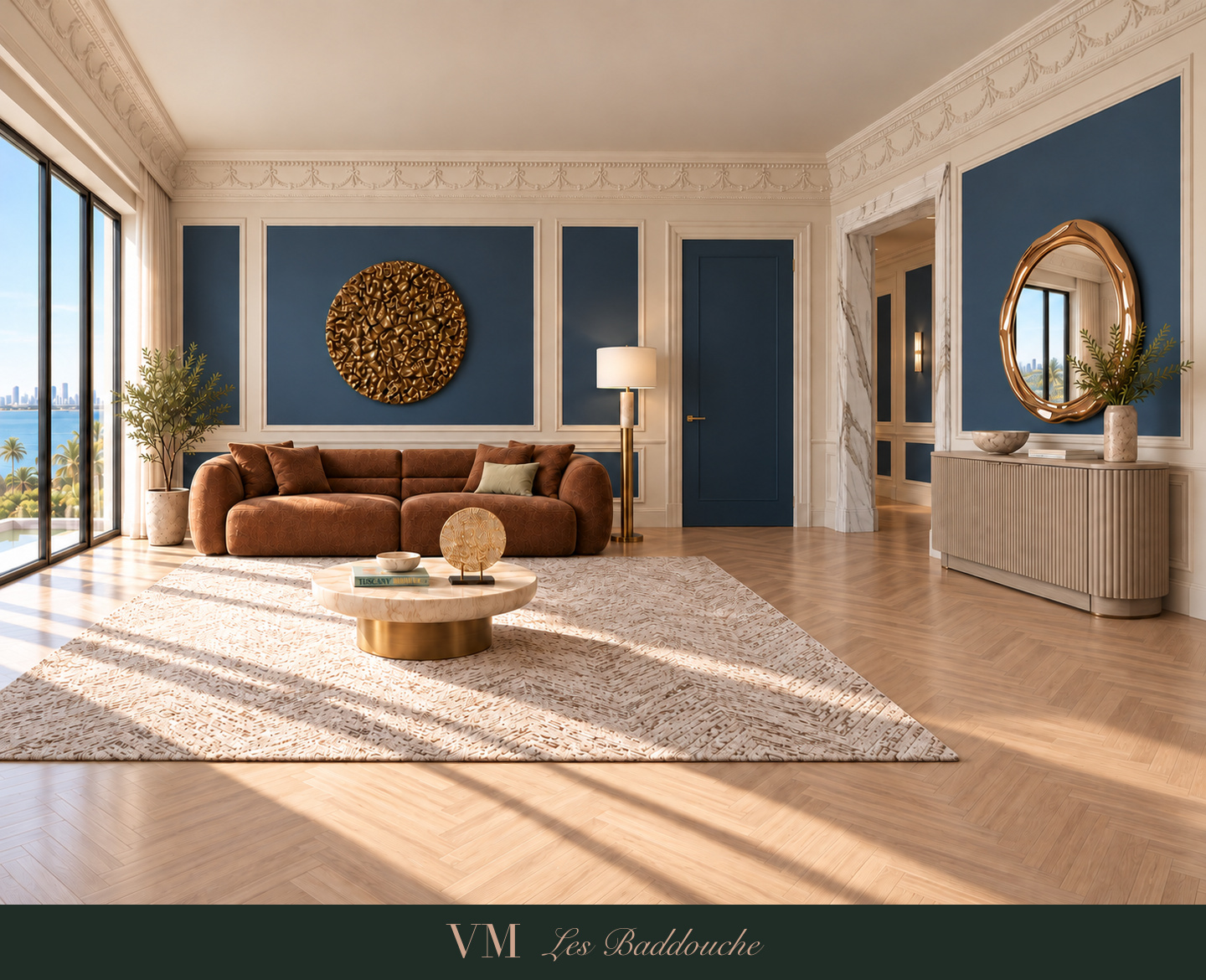
A beautiful sofa, a striking light and a carefully chosen floor can still feel unrelated when they are selected without a shared direction. A cohesive interior begins by deciding how those elements should work together, and how the home should feel when it is being used.
For a Miami interior, that conversation can start with the view, the daylight, existing architecture and the objects you already love. The goal is a personal home with a clear visual rhythm, rather than a collection of impressive purchases.
Write a short design brief
Choose three words that describe the atmosphere you want. For example, warm, tailored and relaxed suggest different choices from dramatic, sculptural and high-contrast. Use those words to assess new selections instead of reopening the entire design direction each time you find an appealing object.
Next, identify what stays. An artwork, inherited table or existing floor may be the strongest starting point for the palette. A useful brief includes those realities, along with the activities each room needs to support.
Give the palette a clear structure
Try a main background color, a warm material and one deliberate accent. In an illustrative living-room scheme, soft walls might support cognac seating and a restrained cobalt detail. Repeat the accent selectively in another part of the room, then leave some surfaces quiet.
Put actual samples beside one another wherever possible. Include flooring, upholstery, wall finish and a metal sample. Review the group in the room during the day and under its evening lighting before making a final decision.
Flooring deserves particular attention because it connects large parts of the home. Porcelain, hardwood and vinyl are different categories to investigate; select the exact product for the intended room, maintenance expectations and installation conditions. Coordinate its appearance with the overall scheme rather than choosing it as an isolated upgrade.
Plan the furniture as a group
Draw the main furniture pieces to scale before ordering. Look at how someone enters the room, approaches a seat and moves toward adjoining spaces. Test the arrangement with the pieces you intend to keep, including side tables and floor lamps.
Then study the composition from the doorway. Give one element the leading role and use the others to support it. If a sculptural sofa is the focus, a simpler table or quieter rug may allow its shape to read more clearly.
Include the architectural details
Doors, wall treatments and cabinetry appear in the same view as the furnishings. Review them together. A compatible door-and-panel system can carry a wall finish across an opening, but that detail needs coordination between the relevant trades.
Continuity can also be simpler: repeat a wood tone, align a few visual references or use a consistent hardware finish. Choose the degree of repetition that suits the home.
Make lighting part of the composition
Use general light for the room, focused light for activities such as reading, and accent light where you want to highlight art or an architectural feature. Consider the natural light and the user's position when selecting and placing fixtures. Separate controls can support different settings for daily life and entertaining.
Start a design conversation with VoulezMiami with photographs, available dimensions and the pieces you want to keep. A coherent plan makes each later selection easier to judge.
Cover image: AI-generated design visualization.